



.webp)
Nigerian Pidgin is one of the most expressive languages in the world, and for most of its history that expressiveness was treated as a liability. It was not a real language, people said — meaning it was not a European language, not a prestige language, not the kind that opened institutional doors.
What Pidgin Actually Is
What it was, was alive, flexible, and capable of capturing nuances of Black Atlantic experience that English and French could not reach. Pidgin languages — Nigerian Pidgin, Cameroonian Pidgin, Sierra Leonean Krio, Ghanaian Pidgin — are not corrupted versions of European languages. They are independent linguistic systems with their own grammar, their own idioms, their own expressive range. The colonial framing that positioned them as deficient was always wrong. The Afrobeats generation is making that wrongness visible.
The Afrobeats Generation's Contribution
The Afrobeats generation changed the calculation by making Pidgin global. When Burna Boy and Wizkid sing in a mix of Yoruba, Pidgin, and English, they are not code-switching for a mainstream audience. They are being precisely themselves, and the mainstream is learning to hear them on their own terms. The commercial success of music rooted in these languages has done more for their prestige than decades of academic argument.
Beyond Music
The generation of creatives working now did not grow up believing the language of the street was worth less than the language of the school. The work reflects that belief — in music, but also in film, in comedy, in social media, in advertising aimed at African audiences. Pidgin and Creole are increasingly the languages of aspiration as well as authenticity, of ambition as well as home.
"We didn't start speaking Pidgin to make a point. We speak it because it's how we think. The point is secondary."
What Comes After the Moment
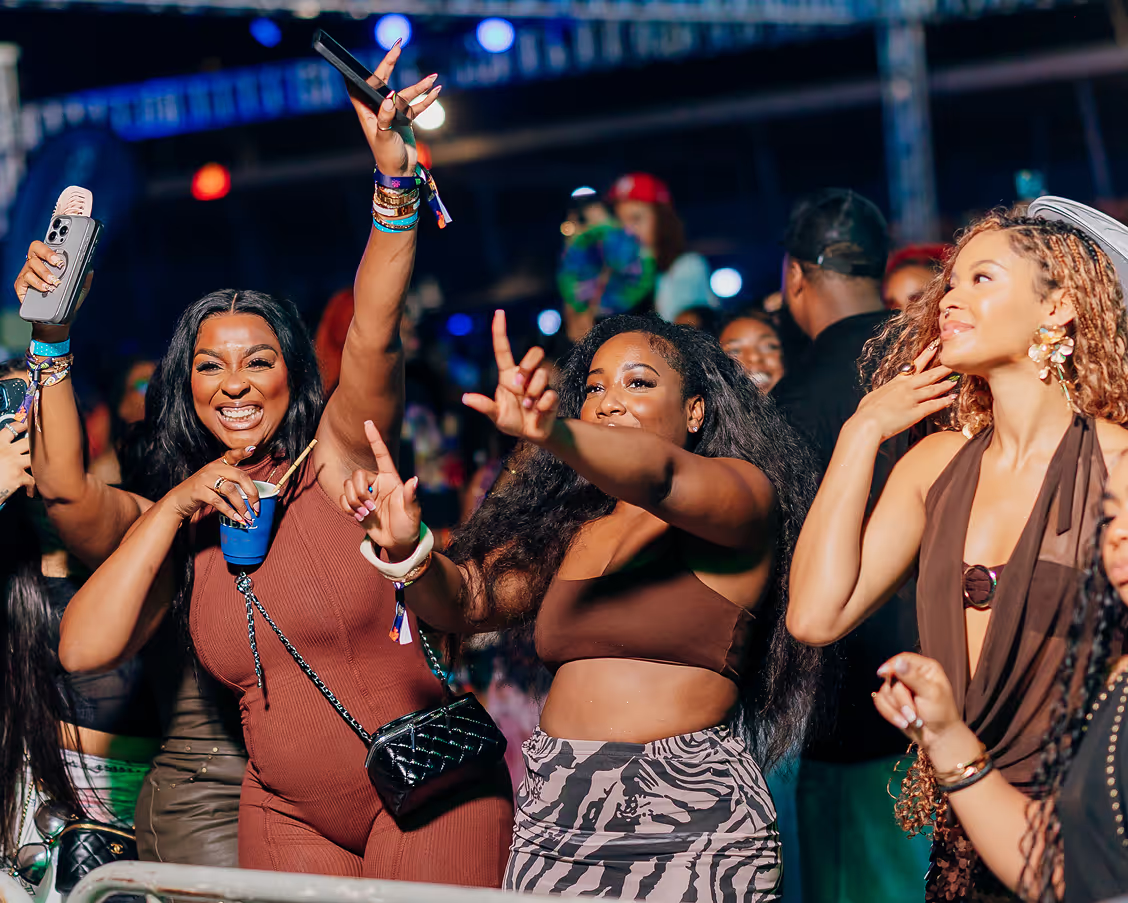
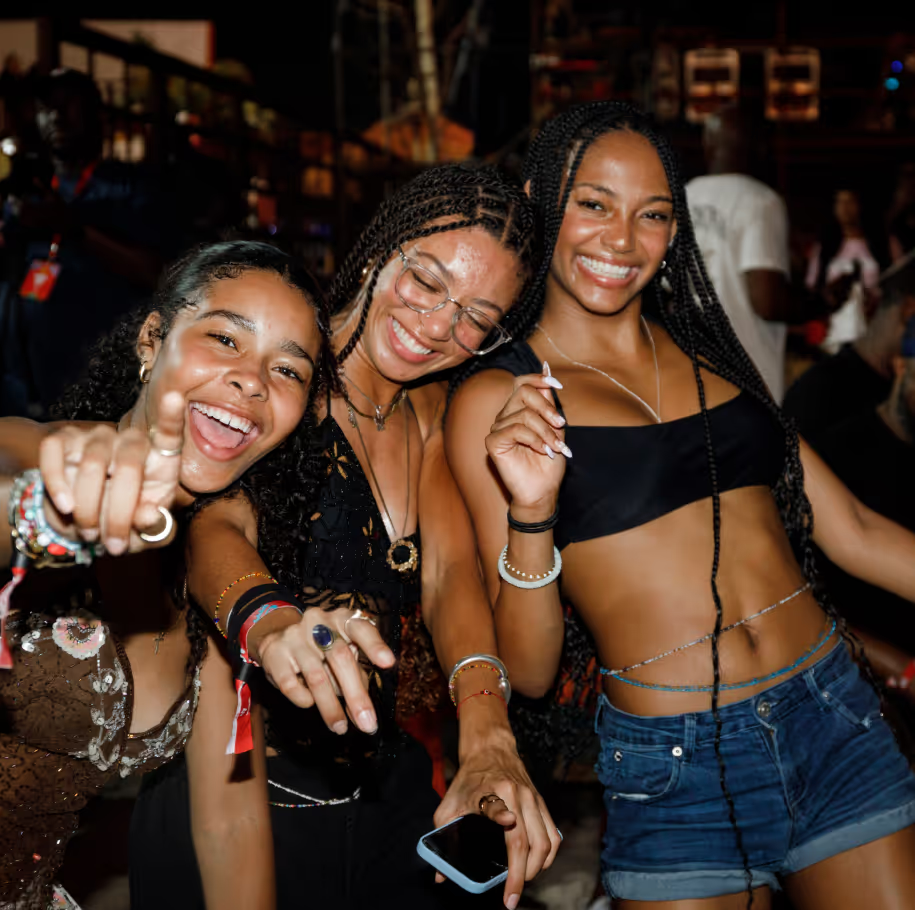
From Afrobeats lyrics to TikTok captions, African Pidgin is becoming the sound of global youth culture. What comes after the moment is the question. Whether the prestige conferred by global pop success translates into institutional recognition — in education, in media, in official contexts — depends on decisions being made by people who are not always paying attention to what is happening in the music. They should be.

%201.webp)
%201.png)
